Saturday, October 8, 2022

Exercise and Time Restricted Eating to Prevent Breast Cancer!


Research shows that exercise is an important step in the prevention of breast cancer!  There are many studies that show strong evidence that exercise lowers the risk of breast cancer (along with colon cancer, kidney cancer, bladder cancer, esophageal and stomach cancers!).

There is also strong evidence that exercise reduces anxiety, depressive symptoms, and fatigue in cancer patients.   Studies show that regular exercise reduces your risk of breast cancer by 20 – 30% with a 38% reduced risk of invasive breast cancers.

Studies also show that breast cancer patients with higher exercise levels have 29 – 41% lower risk of dying from breast cancer.

How Exercise Fights Cancer

Exercise has direct and powerful effects on human physiology that directly lower cancer risk including:

Improved insulin sensitivity – insulin resistance is directly linked to cancer growth and spread!

Improved blood circulation driving more oxygen into cells and helps the liver detoxify cancer causing substances.

Improved mitochondrial function – mitochondria are the energy factories of the cells and healthy mitochondria are key to prevention of many chronic diseases including cancer.

Decreased bodyfat levels – excess bodyfat produces copious amounts of estrogen and being overweight is an independent risk factor for breast cancer for this reason.

Improved immune function – a strong immune system is primed to recognize and destroy cancer cells before they form tumors!

Time Restricted Eating and Breast Cancer Prevention

Time restricted eating is exactly what it sounds like:  restricting your intake of food to a certain period of time each day.    Most Americans eat something every two hours for 16 – 18 hours per day.     Time restricted eating involves shortening this “feeding window” to somewhere between 8 and 12 hours per day.     

In the course of our evolution humans spent hundreds of thousands of years without constant access to food, and even as recently as the 50’s most people only ate two times per day.  Our bodies were not designed to have constant food intake all day, every day and doing so causes problems.

Every time we eat we secrete insulin which is necessary to absorb nutrients into our cells.  However frequent insulin secretion is one of the reasons so many Americans develop insulin resistance which frequently progresses to adult onset diabetes aka type 2 diabetes.   Woman with type 2 diabetes have a 23% higher risk for developing breast cancer and a 30.8% higher risk of breast cancer mortality

There is considerable research linking high evening/night-time calorie intake to elevated insulin resistance and inflammation both which drive breast cancer.

Enter Time-Restricted Eating where you simply restrict calorie intake to 11 - 12 hours per day - ideally having your first meal early in the day and finishing your last meal 11 hours later.   For example, an eating window of 7am - 6pm or 8am - 7pm.   Research has shown that this simple step can dramatically improve insulin sensitivity and inflammation and lower breast cancer risk.

A recent study analyzed data from the Women’s Healthy Eating and Living study and found that breast cancer survivors who didn’t eat for at least 13 hours overnight had a 36% reduction in the risk of recurrence and were 21% less likely to experience breast cancer related mortality. 

The proposed mechanism is reduced insulin levels and improved insulin sensitivity, and this makes perfect sense because elevated insulin levels and decreased insulin levels are directly linked to cancer growth. Each 2-hour increase in nightly fasting was linked to progressively lower hemoglobin A1C levels which is a sign of improved insulin sensitivity.  

An advantage of time-restricted eating versus other dietary interventions like reduced calorie intake is that it is very simple to perform.   To learn more about time-restricted eating (which is also referred to as “intermittent fasting”) check out this previous blogpost on this subject:  http://workoutanytime.blogspot.com/2020/06/the-benefits-of-intermittent-fasting.html

Sunday, October 2, 2022

Strength Training for Heart Health!


New research published in Medicine and Science in Sports and Exercise showed that resistance training – even without doing any cardio – will strengthen the heart and help prevent a heart attack and stroke.

The study looked at data from 12,591 men and woman who came into the Cooper Clinic for at least two preventive health screenings between 1987 and 2006.

The researchers found that a little resistance training can go a long way!    The research showed that even one resistance training session per week cut peoples’ risk of heart disease and dying from a cardiovascular event by 40 – 70 percent – even if they did not get the recommended amount of cardiovascular exercise.

Bottom line – do NOT skip your cardio workouts but make sure you get at least one strength training session per week in!


Sunday, September 25, 2022

How to Deal with Fall Allergies Naturally!


It's fall allergy season again and this can mean dealing with pretty severe symptoms in sufferers.    Treating allergies with nutrition and nutrition supplements can have big advantages over using medications.   

Allergy medication most commonly comes in the form of Antihistamines, and there are some big problems with long-term use of these medications.     It is now known that prolonged use of antihistamines decreases levels of acetylcholine which is a key neurotransmitter involved in memory and other important functions.   In fact, long-term use of antihistamine use increases the risk of senility, dementia and Alzheimer’s Disease in older adults.

What are Allergies Anyway?

Allergies are abnormal immune reactions to specific agents (proteins) known as antigens/allergens, which include many substances such as foods, drugs, pollens, dust mites, animal danders, feathers, along with many others. 

Allergies may also develop when an otherwise innocent substance has significant contact with an already inflamed surface (known as sensitization).  For example, when sick with a respiratory illness, respiratory surfaces are already inflamed and substances present at this time may be “remembered” as being foreign.  This can also occur with chemical substances known as “haptons” which are combinations of self and non-self which can lead the immune system to attack the self. 

Since there are multiple pro-inflammatory substances involved with allergies it is rare to obtain adequate control with single products/medications.  The most potent chemical mediators in allergies and asthma are leukotrienes.  Some leukotrienes are one thousand times more potent than histamine as stimulators of bronchial constriction and allergy. 

Interestingly, many medications that reduce one inflammatory pathway actually boost leukotrienes.    For example, Aspirin and other NSAIDs (Non-Steroidal Anti-Inflammatory Drugs like Ibuprofen) result in the production of excessive levels of leukotrienes in sensitive individuals although they decrease prostaglandins associated with inflammation and thereby relive pain.  So long term they can create a much more severe problem.

Asthma is linked to allergies and can be a severe and life threatening condition.   Do NOT try to self-treat Asthma – see a physician!

Strategies for Allergies

Try to avoid allergens by using air filters, regularly cleaning all surfaces and vacuuming and keeping your air-conditioning system on while regularly changing filters to filter out as many allergens as possible.   Remember your car cabin filter as well, and take showers and wash clothes after being outside for long periods of time.

Change your diet to reduce inflammation.    Dramatically reduce your intake of refined carbohydrate – sugar and starch which drive insulin which drives inflammation.  At the same time increase your intake of low glycemic, organic fruits and vegetables such as berries, broccoli, brussel sprouts, etc.   These plant foods contain polyphenols which are potent anti-oxidants and help to reduce inflammation and allergies without side effects.

Increase your intake of Omega 3 Fatty Acids from cold water fish such as Alaskan Wild Salmon and/or take an Omega 3 Supplement such as Krill Oil.    Omega 3 fatty acids will always reduce inflammation if taken in sufficient dosages so this should be a primary strategy for allergy sufferers because they produce many side benefits.   The only exception is people taking any type of medication to thin blood and reduce clotting like Coumadin.   In this case the combination can be dangerous!

Nutritional Supplements for Allergies

There are several highly effective nutrition supplements for allergies including some key herbs.

Local Raw Honey – it MUST be local and must be raw because it will contain small amounts of local pollen and works by getting the body used to pollen much like an allergy shot.     A Tablespoon a day is as much as you need.   Many people swear by this simple and safe remedy!

Stinging Nettle Extract – this herb has a long history of effective use for allergies and freeze dried preparations seem to work the best and are best taken BEFORE allergy season even begins to put a damper on symptoms before they start – this is true of all nutritional approaches to allergy by the way!

Euphrasia Officianalis – aka “Eyebright” is an herb which name says it all – it is highly effective for eye allergy symptoms.

Quercetin – is a flavonoid contained in high amounts in apples, peppers, red wine, dark cherries and berries, tomatoes, cruciferous vegetables such as broccoli, cabbage and sprouts, and raw red onions.   To treat allergies taking supplemental quercetin is the way to go and the best Quercetin Supplements are Quercetin Phytosome supplements. An excellent product is Mercola Quercetin and Pterostilbene which can be purchased on Amazon.  Two 250mg capsules a day is a good dose. Quercetin is proven to decrease your chance of contracting a viral illness like the cold or flu by 9 times!

Boswellia Extract – Boswellia aka Frankincense (yes the herb mentioned in the bible!) can be highly effective for allergies and other forms of inflammation including arthritis because it blocks the formation of leukotrienes!    To get the benefits you must take 5-loxin which is a specific extract.   Note that in some individuals 5-loxin can cause or exacerbate heart burn so it is not for everyone, but when it works it can be highly effective!

Butterbur Extract – this plant extract can be highly effective for inhibiting leukotrienes and allergy symptoms or side effects.   You need to take a standardized extract with standardized levels of Petasin and Isopetasin) and free of Pyrrolizidine Alkaloids aka PA.  High quality brands include Life Extension, Swanson, and Enzymatic Therapy to name a few.   This product can also help many migraine sufferers and is a well-researched, proven treatment.

NAC – N-Acetyl Cysteine - helps thin mucus naturally and boost levels of the body’s most important antioxidant Glutathione – every allergy sufferer should be taking 600 – 1,200mg per day!

You will also find combination of these ingredients in particular products, and it is worth experimenting a bit because if you find the right product or combination of natural products you can find relief without sedation and without the side effects associated with antihistamines and more potent drugs like steroid nasal sprays or oral steroids.

Saturday, September 17, 2022

The Cable Pull-Through for Strong and Toned Glutes and Hamstrings!


Cable Pull-Throughs may be the best exercise you aren’t doing!   They share a lot in common with the Kettlebell Swing, but they are much easier to learn and can really help to groove the hip hinge pattern.   The pull-through is fantastic for building posterior chain strength and directly carries over to the field of play by teaching you how to use your glutes and hamstrings to produce hip extension for running and jumping.   

Specifically, it teaches you to separate your low back from your hips during the hip hinge pattern. Many people use their low back to produce movement which sets them up for injury!   The pull-through also provides full-range loading with no dead spots in the movement which teaches you to maintain full-body tension throughout the entire range of motion for hip extension and flexion.

The pull-through is also an excellent choice for people with low back issues because it places much less load on the spine yet provides the benefits of a deadlift or other hip hinge movements like the kettlebell swing.  
Last but not least the pull-through can help as a corrective exercise for people who consistently fall into the pattern of being hamstring dominant in classic glute exercise like supine bridges.  When doing bridges aka hip lifts many people will have hamstring cramps because they are not effectively activating their glutes so consequently compensate by overusing their hamstrings.    For these folks cable pull throughs can often completely fix the problem by teaching them to use their glutes more and hamstrings less for hip extension!
How to do a Cable Pull-Through
Set an adjustable cable in a low position – not necessarily the lowest position because you want the line of pull to be more horizontal than vertical which is one of the big advantages of using a cable over a free weight! Keep in mind standing hip extension is more of a horizontal movement than a vertical one.
  1. Attached a tricep rope to the end of the cable so you can grasp both ends of the rope.
  2. For this movement you will face away from the cable with a slightly wide stance and think about pushing the knees out from the center. You are going to reach down and back through your legs and grasp both ends of the rope.
  3. This is NOT a squat movement – so sit back like you are trying to touch a wall behind you with your butt. Keep pushing back until your hands are past your knees.
  4. Keep your spine straight the whole time! This means maintaining the natural arch of the low back and not allowing your upper back to round – you will really feel the stretch in the hamstrings if you are doing it correctly!
  5. Your head should follow the hip hinge with chin-tucked slightly throughout – you do NOT want to hyperextend the neck!
  6. At the top of the movement concentrate on squeezing the glutes at the top without locking the knees.
  7. A good starting point is 3 – 4 sets of 8 – 15 reps and this is NOT about moving as much weight as you can or trying to rack the stack! Be mindful during the movement and make sure the back stays flat, neck does not hyperextend, and you feel those glutes firing!
For a great visual watch this video teaching the movement by Tony Gentilcore:  https://www.youtube.com/watch?v=xZFRe50WzpM

Wednesday, September 14, 2022

Lack of Sleep Causes Sweet-Tooth!


You heard that right - not getting enough quality sleep is directly linked to craving sweets, weight gain, and difficulty losing weight!

Sleep: Your Body’s Best Friend

Sleep is important for just about all the systems in your body, and lack of sleep reduces cognitive function including reduced reaction time, impaired decision making and memory.  Sleep is also essential for the repair and recovery of the body.

Even if you think you get enough shut eye you may still be suffering from the symptoms of sleep deprivation.   Unfortunately, just a little sleep deprivation can have a significant effect on weight gain.

How Lack of Sleep Causes Weight Gain

Lack of sleep increases the levels of a stress hormone called cortisol, and cortisol increases appetite significantly.  Sleep deprivation also saps willpower and decision-making ability so not only are you hungrier – you are more likely to make poor food choices.     Sleep deprivation is a stressor and when you feel stressed you tend to choose high carb foods which boost serotonin.

At the same time, the body’s ability to handle carbs properly is reduced.    Your cells become less sensitive to the effects of insulin called insulin insensitivity which is what type 2 diabetes is all about.   If lack of sleep is a chronic condition you quite literally can make yourself gain weight and become diabetic!

In addition, when you are tired, a hormone called Ghrelin is boosted while Leptin levels drop.   This is quite literally a double whammy because Ghrelin increases hungers and Leptin tells you when you full and satisfied.   So you are hungrier but do not feel satisfied when you do eat so you eat more!

In fact, studies have shown increased calorie intake of over 300 extra calories per day in sleep-deprived people.

Sleep is as important as exercise and diet so make it a priority and check out this previous blogpost on how to improve sleep: http://workoutanytime.blogspot.com/2020/04/sleep-in-time-of-coronavirus.html 

Friday, September 2, 2022

Using Tempo for Bigger Strength Training Gains!


Tempo is the speed of movement for a resistance training exercise and there are four distinct phases for each exercise.  Tempo directly determines time under tension which is a very important variable in resistance training. 


The first phase is the time spent on the eccentric phase of the movement (where you are lowering the weight and the muscles are lengthening) like when you lower a dumbbell from the top position to the fully lowered position in the bicep curl.  

The second phase is any time spent pausing at the end of the eccentric phase like holding your body an inch off the ground in the bottom of a push-up. 

The third phase is the time spent in the concentric phase of the movement (where you are lifting weight up and muscles are shortening) like when you push up from the ground in a push-up.    

The fourth phase is any time spent at the end of the movement like pausing in the fully contracted position at the top of an abdominal crunch.

Tempo is expressed with four numbers like this 3-0-1-0 - which means taking three seconds in the eccentric/lowering phase; no pause at the end of the eccentric/lowering phase; 1 second for the concentric phase where you lift the weight and the muscle shortens; and no pause at the end of the lifting phase.

Sometimes this is shortened to three numbers such as 3-1-1 which means lowering resistance for 3, pause for a count of 1 at the bottom of the movement (like the bottom of a squat), and then quickly lift the weight in one second and repeat.

Changing Tempo is a huge tool for preventing plateaus in your workout program because it dramatically changes the stimulus of the workout and directly affects the time under tension.   There are many possibilities but there are several tried and true tempo schemes for resistance training.

Whenever you are having trouble feeling a particular target muscle group in an exercise cut your load and increase your time under tension.   Try taking 4 seconds to lift the weight, brief pause at top without locking out, then lower for 4 seconds and pause briefly at the bottom position:  4-1-4-1.

This slow down creates a lot more time under tension allowing you to feel and control the muscles doing the work to hit your target!

Another great tempo scheme is eccentric/lowering accentuated which means slowing down during the lowering phase to 4 – 5 or even up to 10 seconds for big movements.  So a tempo like 6-1-1-1.

Last but not least is pause tempo where you place emphasis on holding the bottom or top of the movement such as the bottom of the squat or top position of a dumbbell lateral raise.      For the squat example tempo might look like this:   4-4-2-0 while for the lateral raise it might look like this: 2-4-2-0

For more information on tempo training click here:  https://www.paulmfitness.com/exercise-tempo/ 

Sunday, August 28, 2022

How Eating Sugar at Breakfast Sabotages Weight Loss Efforts


Many people notice that eating breakfast makes them hungrier throughout the day, and this is probably NOT their imagination!   In this case the culprit is likely what they eat.  Specifically, refined carbohydrates, including sugar, can drive hunger particularly if they are consumed with little fat or protein.

A study tested this hypothesis with 16 healthy young women between the ages of 18 and 30 who had a stable body weight for the last 3 months.  Anyone with diabetes or on medications that affect appetite was excluded along with people who were allergic to any part of the meals given as part of the study.

Participants fasted for a minimum of 8 hours prior to the study.  In the morning participants came to the laboratory and were given a standardized test meal consisting of passion fruit juice, one cup of coffee, French bread and 5 grams of margarine.   The two drinks had no sugar added and the participants were instructed to sweeten to their preferred taste.

The sugar container given to the participants was weighed both before and after its use by each person to know the amount of sugar each person added to their drinks.   After completing the entire meal participants did not eat or drink anything (except water) until lunchtime.

Lunch was served 3 hours after breakfast and consisted of pasta with tomato sauce, and participants were instructed to eat until they felt satisfied. 

Study Results

The participants were divided into two groups based on the amount of sugar they elected to add to their breakfast.   The high sugar group added about 25 grams of sugar to breakfast while the low sugar group only added 14 grams of sugar. 
  
Both groups were evaluated for their perception of hunger and satiety.  The high sugar group had significantly higher levels of hunger during the three hours after breakfast AND consumed significantly more pasta at lunch!

Take Home Message

Avoid high sugar breakfasts such as standard breakfast cereal, fruit juices (eat fruit don’t drink it!) and consume 15 – 20 grams of protein and a small amount of fat.   Also try to add higher fiber carb choices like berries instead of banana, adding spinach to an omelet, etc.      Examples include an omelet with spinach with berries or a shake with protein, greens, and small amount of MCT oil for fat.

Sunday, August 21, 2022

The Incredible Health Benefits of Safe Sun Exposure!


Many people know that the mid-day sun exposure stimulates Vitamin D production which is critical for overall health and wellness.    However, most people are not aware that the other portions of the sun’s energy spectrum are also critical for robust health and wellness!     

There are four key practices to harness the tremendous benefits of the sun:

Go outside as soon as possible after waking up to expose your eyes to the high levels of blue light from the sun.

Get adequate Mid-Day Sun exposure on as much skin as possible to optimize Vitamin D production.  

Get adequate morning and late afternoon sun exposure to expose your body, eyes and brain to the highest levels of Near Infrared Rays from the Sun.

Minimize light exposure and particularly blue light exposure in the evening

Waking Sun Exposure and Circadian Rhythm and Sleep Quality

Many people are aware that evening and night light exposure can really hurt your sleep.   However, what most people do not know is that early morning sunlight/blue light exposure is just as important to setting your body’s circadian rhythm and getting a good night’s sleep!   

Human beings have been on the earth for hundreds of thousands of years and until very recently we got early morning sun exposure every single day as soon as we woke up.    The sun emits high quantities of blue light.

The key to setting our daily rhythm is high levels of bright blue light in the morning and low to no levels of blue light in the evening and before bed!

Indoor lights do not pack nearly the punch of outdoor sunlight – even on an overcast day.    Brightness levels are measured in “lux”, and on a bright sunny day the outdoor lux levels are over 100,000 lux!   You may also see the term “lumens”, and 1 lux = 1 lumen per square meter so they can be used somewhat interchangeably.  Even on a very overcast day outdoor light levels are close to 2,000 lux.   In contrast - the average well-lit home indoor lux levels are somewhere between 100 – 500 lux so MUCH lower than outdoor sunlight!   

Even 5 minutes of exposure to morning sunlight on a bright day is sufficient to help your sleep and energize you in the morning!   On overcast days try to get 10 – 15 minutes of outdoor light – you can have your coffee outside!    

During winter months it is well worth considering purchasing a high lux light – needs to be at least 10,000 lux to be effective and there should be zero UV light emitted.     Here is an excellent unit:  https://www.amazon.com/Carex-Day-Light-Classic-Bright-Therapy/dp/B00PCN4UVU/ref=psdc_13053141_t4_B078KFCN1N

Sunlight and Vitamin D

Vitamin D is produced by the UVB rays emitted by the Sun and these levels are highest during mid-day sun and depending on your skin type, time of year and where you live you need to spend anywhere from 5 – 30 minutes with plenty of your skin exposed to achieve the Vitamin D boosting effects.   To learn more about this check out this previous blog post on safe and effective sun exposure:   http://workoutanytime.blogspot.com/2022/05/the-facts-on-safe-sun-exposure-and.html

Morning and Late Afternoon Sun Exposure

Another important portion of the Sun’s Spectrum is infrared and near infrared light (NIR) which we experience as heat.    In particular near infrared light has been proven to provide tremendous health boosting effects.     Fortunately – the near infrared portion of the sun’s rays makes up 40% of the output and near infrared is highest in the morning and late afternoon.

Whenever you feel heat from the sun you know you are getting infrared and near infrared exposure and unlike UV light near infrared cannot damage skin and goes through single layers of clothing easily.    In fact, near infrared can actually penetrate through the skull into the upper meninges of the brain with some big benefits!

Benefits of Near Infrared Exposure

There are big benefits to Near Infrared because NIR directly stimulates increased energy production from the mitochondria in our cells which are responsible for almost all the energy in our bodies. 

As the mitochondria increase energy output they also generate melatonin!   Melatonin is not just important for stimulating our sleep cycle – it has many other powerful benefits.

Melatonin has been shown to have antioxidant and anticancer effects, to play a role in the regulation of blood pressure and glucose levels, is highly anti-inflammatory, and has also been shown to lower the risk of SARS-CoV-2 infection and mortality.

Melatonin exists in two main forms within the body – circulatory melatonin, which is produced by the pineal gland and has its major effect on sleep and the circadian rhythm, and subcellular melatonin, which is produced and used locally by the mitochondria within our cells.

Sunshine is our major source of infrared and NIR light, but it can also come from exposure to fire (campfire, candle flames, fireplace, etc.) and certain types of light bulbs.   Here is a great video showing exactly how this production of melatonin produces its many benefits:     https://youtu.be/sNklS0lzlgA   

Near Infrared Maximized by Plants

While direct sunlight exposure is great – you can actually magnify near infrared exposure by walking in and around plants!    Green leaves strongly reflect NIR – checkout this NIR camera photo to appreciate just how much NIR plants can give off:  http://www.idahoairships.com/idaho-airships-envira-nir-gallery-working-2_19-31/

NIR in Winter

To get the benefits of NIR during winter months you can use a infrared/near infrared sauna or use a high quality Near Infrared Bulb.    Here is an excellent example:   https://www.amazon.com/TheraBulb-NIR-Near-Infrared-Bulb/dp/B01855YCXM

Minimizing Blue Light Exposure at Night

During the evening and night-time hours it is critical to reduce overall light exposure and specifically blue light exposure to allow the Pineal Gland to release melatonin.    

Here are some key steps you can take to minimize blue light at night:

Reduce the light levels in your home by using dimmers or just turning off lights.  

Minimize your exposure to TV – particularly in the hour before going to sleep.

Minimize use of your phone and computer

Install a redlight filter like the free Twilight App for your phone and the free flux program on your laptop to reduce blue light output based on time of day so that during evening and night hours you get less blue light exposure!

Replace regular night lights and bedroom bulbs with redlight bulbs – true redlight does NOT interfere with sleep or melatonin release they way Blue Light does.    In addition, it does not interrupt night vision.  Here is a great product that you can also travel with:   https://shoptruelight.com/product/truelight-luna-red-portable-nightlight/

You can also try blue light blocking glasses which are available on Amazon. 

Keep your room as dark as possible when sleeping and/or consider buying a comfortable pair of sleeping mask which blocks all light.

Take Home Message

Sun exposure is part of our evolutionary heritage and you NEED regular sunlight optimize your health and wellness.       To see an excellent in depth review of the research on the concepts mentioned in this blogpost click here:   https://youtu.be/5YV_iKnzDRg


Sunday, August 14, 2022

The “Flamingo Test” for Longevity


Yes – you heard that right – the Flamingo Test – or one legged stance test is directly correlated with your risk of dying as you age!    Balance is a strong indicator of your overall health, and as you age keeps you from falling which can cause serious injuries and death.    

Falls are the second leading cause of unintentional injury deaths world-wide with an estimated 684,000 people dying from falls each year!   

In a new study published in the British Journal of Sports Medicine researchers tested people between the age of 51 – 75 asking them to balance on one leg with their heads up and their arms at their sides for 10 seconds.

20% of them failed.   When the scientists followed up seven years later, those who failed the test were 84% more likely to have died than those who passed.

When you consider that you spend the vast majority of your time on one foot during all movement you can begin to see why the ability to maintain balance while on one foot is so important.

Simple Exercises to Improve Balance and Decrease Fall Risk

Do single leg balance exercises daily – and do them near a solid base of support you can hold onto if you feel like you are going to fall.    Over time you will improve your ability to balance on one leg, and you can continue to improve balance by increasing the level of challenge once it gets easy.     You can do this in several ways:

1.     Try closing your eyes – be careful this is really challenging but if you build up to the point where you can stand on one leg with closed eyes you will have dramatically improved your balance and ability to prevent falls.

2.     Build your lower body strength and core strength through strength training exercises.

3.     Use the reACT Trainer – there is no better way to build lower body and core strength and stability resulting in dramatic improvements in balance.    To learn how to use the reACT Trainer click here:  https://www.youtube.com/playlist?list=PLuwTn-fHAYmTlZ64o-wcMPYaWawTfKZnl

4.     Make sure you get your vision checked and corrected – vision problems account for many falls!


Sunday, August 7, 2022

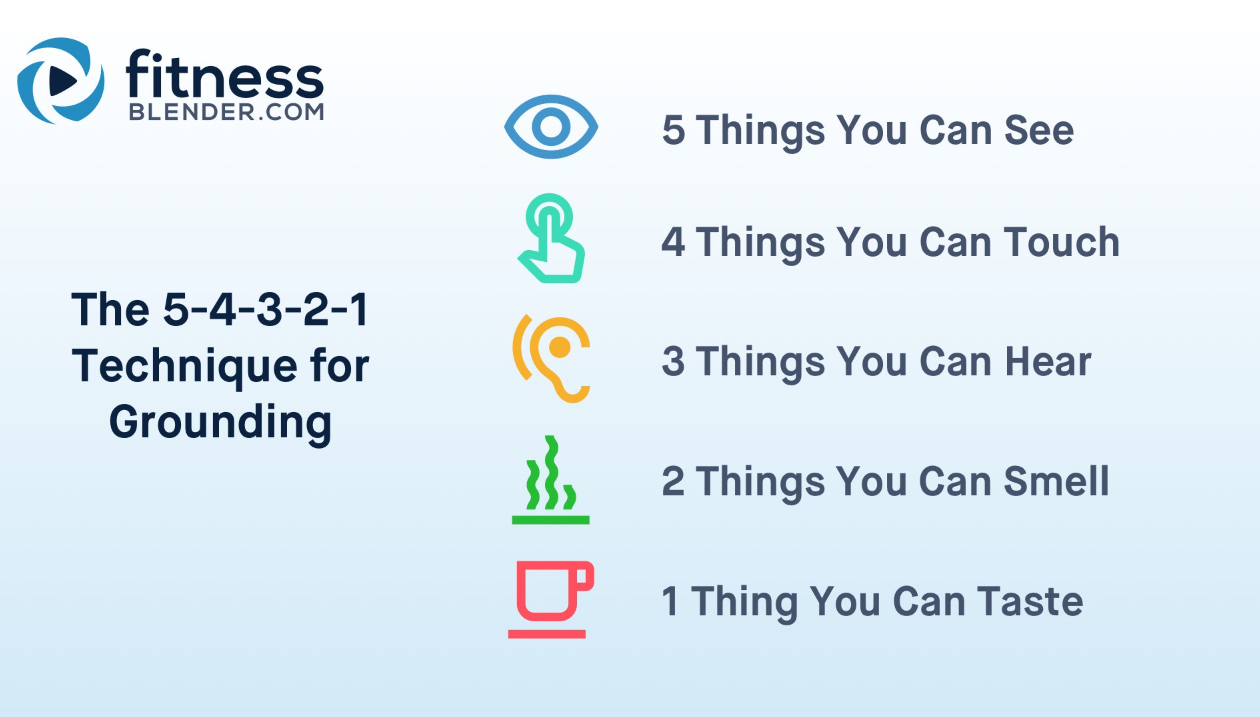
The 5-4-3-2-1 Method for Immediately Reducing Anxiety!


Anxiety is something we all experience at some time or another, but for many it is a constant challenge.   It is estimated that 30% of adults suffer with anxiety and many children as well.   At its worst anxiety can be crippling and even when it is not that severe it is extremely unpleasant.

Regular exercise has been proven to be incredibly effective at quickly reducing anxiety and keeping it under control.    However exercising is not always practical when you are in the middle of a panic attack or experiencing high anxiety.

In this case the 5-4-3-2-1 technique is a simple method to quickly reduce anxiety that can be done by anyone, anywhere, anytime.   The reason it works is because it addresses the root cause of ALL anxiety which is fear and uncertainty about the future.    Anxiety is always about what is going to happen – not what is happening right now!   Some anxiety is about what is going to happen in the near future – such as when you are about to give a speech and other anxiety is about events further ahead.

In any case if we can shift our mindset to be fully in the present moment anxiety disappears!    The 5-4-3-2-1 technique is a great way to do this, and here is how you do it:

1.     Start by simply paying attention to your breathing – just pay attention – do not try to change your breathing - just observe it!

2.     Next identify 5 things you see around you such as a spot on a wall – a painting – a glass on a table – you can say it out aloud or just to yourself.

3.     Next identify 4 things you can feel/touch around you.   Could be a wall, a door, your hair, the ground, etc.

4.     Next identify 3 things you hear.   This could be external like an air conditioner or internal like your belly rumbling.

5.     Next identify two things you can smell – you can move around to find some type of odor if you cannot immediately smell something.

6.     Next identify something you can taste – like gum, your toothpaste from when you brushed your teeth, or the meal you had before.

Do not worry if you cannot identify every item – the key is shifting your mental focus to your immediate surroundings and connecting with all five senses:  sight, sound, touch, taste, and smell.

You will be amazed how quickly this can reduce anxiety and bring you into the present moment where anxiety does not exist!

For more information on this technique click here:  https://www.fitnessblender.com/articles/the-5-4-3-2-1-grounding-technique