Sunday, November 27, 2016

The Importance of Matching the Fitness Assessment to the Client’s Goal

The primary purpose of doing an assessment with a new personal training client is to establish a baseline to measure progress against over time.   Implicit in this purpose is that the measurement must be a reliable indicator of the client’s goal.      
For example, if a client’s goal is to “get lean and long muscles but not get too big” as fitness professionals we know that in our world that means maintaining or slightly increasing muscle mass while reducing bodyfat levels.     
As such a relevant assessment for this particular goal would be body composition analysis.       As important as the assessment itself is -- helping the client understand how the assessment relates to their stated goal is even more important!
For example, clients come to us with preconceived beliefs about weight and appearance such as the belief that losing weight is the same as losing fat.     As fitness professionals we know this is NOT the case, but it is very important that we get the client to understand this so that they accept the validity of using body composition to assess their progress versus scale weight!
In this example use of pictures such as those showing 5lbs of fat and 5lbs of muscle (see below) or even better having actual physical models the client can hold and touch can really help to insure the client is on the same page with us.

The default assessment of most trainers is body composition, but this is not the best assessment for all goals.    For those clients whose primary goal is performance related such as lifting heavier weight, jumping higher, running faster, running longer, etc. a body composition test is NOT the right choice.   In these cases a specific performance related test such as a 1RM test of the particular lift they are focused on improving would be a much better choice.     Or in the case of an older client’s goal to avoid injury and prevent falls the Functional Movement Screen and/or a functional balance test would be a better baseline and ongoing assessment.      Again the key is that the client understands the relationship of the assessment and believes it is a valid measure –  if not they will not buy in to you or the program you give them!
The take home message is to always match the type of assessment you are using with each client to the client’s goal.      In addition do not assume that the client will automatically see the connection between the assessment and their goal.    Take the time to explore and understand the client’s beliefs as they relate to their goals, and educate the client on how and why a particular assessment is the right one for them and their goals!

Sunday, November 20, 2016

Exercise for the Prevention of Alzheimer's Disease

One of the greatest fears of older adults is Alzheimer’s Disease (AD).     AD is devastating to the victim and the victim’s family.    Although there is no cure for this disease, there are ways to minimize the risk including regular exercise.

While some level of memory loss is a normal part of aging, Mild Cognitive Impairment, or MCI, is a sign of more substantial memory loss and linked to AD.   The good news is that there is research showing that exercise can improve memory and brain function in older adults with MCI!

A University of Maryland study published in the Journal of Alzheimer’s Disease showed a 12-week program of moderate exercise improved memory recall and neural efficiency in a group of older adults (average age 78) with MCI.    No drug has ever shown results like these!

In the study two groups of inactive seniors did an exercise program on a treadmill guided by a personal trainer.    One group had MCI while the other group did not.  The amount of exercise was consistent with the recommendation for a weekly total of 150 minutes of moderate intensity exercise – meaning it is not so strenuous that you cannot carry on a conversation while doing it.  

Tests and imaging were done before and after the 12-weeks of exercise.  The tests showed a significant improvement in neural efficiency meaning it did not take as much work to recall or recognize a name.   Since one of the hallmarks of MCI is a big decline in remembering names this improvement is significant.


The results of this study suggest exercise may reduce the need for over-activation of the brain to recall something.    This is great news for the thousands of Americans looking for something they can do to preserve normal brain function and memory as they age!

In another study done by one of the same researchers four groups of people were studied based on their classification as being at low or high risk for AD and having low or high activity levels.  Specifically, the research measured changes in hippocampal volume.   Loss of hippocampal volume is a specific part of AD directly linked to loss of memory.   In addition, there are no known treatments to preserve hippocampal volume in people who may develop AD.

Of the four groups studied only those with a high genetic risk who also did not exercise experienced a loss of hippocampal volume over the 18 months of the study.  All the other groups, including those who were at high risk for AD but who were physically active, maintained the volume of their hippocampus.

Sunday, November 13, 2016

Omega 3 Fatty Acids and Health

Omega 3 fatty acids are essential polyunsaturated fatty acids (PUFAs) required for digestion, muscle activity, blood clotting, visual acuity, memory, proper cell division and function, cardiovascular health, cancer prevention, etc.    They are essential meaning your body cannot manufacture them so they must be consumed as part of your diet or as a supplement.
Another class of essential fatty acids are Omega 6 fatty acids which also perform a wide range of essential functions.    However, it is very easy to get enough Omega 6 fatty acids and in fact the ratio of Omega 6 to Omega 3 fatty acids has become completely unbalanced as part of the modern lifestyle, and this is having direct and severe health consequences!
Omega 3 Fatty acids come from either plant or animal sources including:
Many fish
Krill
Canola Oil
Flaxseed
Walnuts
Animal based sources of Omega 3 contain (fatty fish, fish oil and krill oil) primarily contain docosahexaenoic acid (DHA), a long-chained PUFA consisting of 22 carbons and eicosapentaenoic acid (EPA), which has 20 carbons.
Plant based Omega 3 fatty acids shorter-chained PUFA consisting of 18 carbons. They are completely devoid of DHA and EPA.
Functions of Essential Fatty Acids
Essential Fatty Acids (EFA’s) are integrated into cell membranes and produce a broad class of extremely powerful chemicals called “Eicosanoids” and among these specifically Prostaglandins.     These chemicals produce a myriad of effects but long story short Omega 6 fatty acids produce inflammatory chemicals while Omega 3 Fatty Acids produce anti-inflammatory chemicals.  Both are necessary for good health, but because of modern diets and an Omega 6 to Omega 3 ratio that is way out of balance virtually everyone needs to find ways to decrease the intake of Omega 6 fatty acids and increase Omega 3 fatty acids.
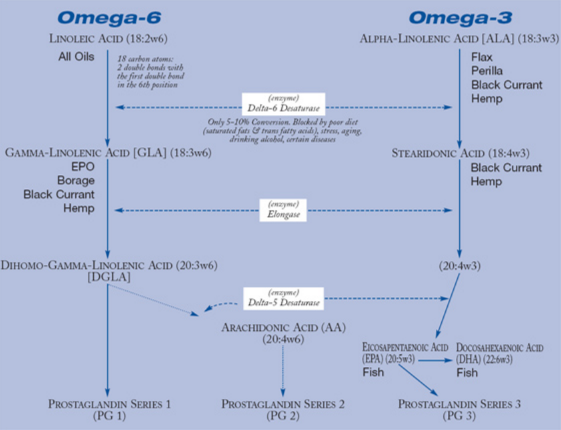
As the chart below shows not all Omega 3 fatty acids are the same.  
 
ALA requires three steps to be converted to EPA or DHA which are the direct precursors to the Anti-Inflammatory Biochemicals that produce key benefits throughout the body.     These steps are controlled by three enzymes and when a person is deficient in any of these three enzymes this conversion does NOT take place.    Unfortunately, the majority of people have deficiency of Delta-5 Desaturase.   So plant sources of Omega 3 fatty acids are not effective.
 Typically, less than 1 percent of the ALA is converted to EPA. Some studies have found the conversion rate to be as 0.1 to 0.5 percent. Conversion is also dependent on having adequate levels of other vitamins and minerals.   So, while a tiny amount of the ALA you consume can be converted by your body into long-chain omega-3, it's a highly inefficient strategy and nowhere near as helpful as supplying "straight" DHA and EPA from marine sources.
 It is important to know that you should NEVER take flax oil or use ground flax seed unless it is freshly ground because the highly perishable ALA will be oxidized. If you have any throw it away immediately.

Effects of Plant Based Omega 3 vs Marine Based Omega 3
After eating a meal of salmon or taking krill or fish oil (marine sources of Omega 3 fatty acids), the fatty acid level in your plasma (blood) will remain elevated for more than three days afterward.   These fats are not typically used as food for energy
ALA from plants is rapidly absorbed, peaking a couple of hours after ingestion. Within 10 hours, they're gone. These fats tend to be used as fuel!
So, Omega 3 fatty acids from plants are simply a source of energy — while the long-chain fatty acids, those with 20 and more carbons, especially EPA and DHA, are structural elements that actually make up your cells. This is a MAJOR difference between plant- and animal-based sources.
EPA and DHA have many biological effects, most notably anti-inflammatory activity and communication within the cell and between cells.
Another tell-tale sign suggesting the importance of EPA and DHA is their half-life, which may be as long as 60 days for DHA. Your body tends to accumulate and hold on to it and not want to let it go.
EPA is used up much faster, in part because it's a smaller molecule, but also because it behaves differently from DHA.
EPA and DHA are Essential for Good Health
DHA is especially important, as it is a component of every cell in your body, and it's particularly crucial for your brain. More than 90 percent of the omega-3 fat found in brain tissue is DHA, and the development of a normal brain in a fetus is dependent on the availability of DHA. All other omega-3 fats are found only in trace amounts in your brain, including ALA, regardless of how much ALA you consume.  

There are specific transporters for long-chained omega-3s in your blood-brain barrier, the placenta of pregnant women, which transport these molecules in a very precise way into the cell membranes where they belong. No such transporters exist for ALA from Flax or other sources.

Therefore, the key is obtaining your Omega 3 fatty acids from animal sources NOT plant sources!

Two Key Sources of Animal-Based Omega 3 Fatty Acids

There are two primary animal sources of Omega 3 Fatty Acids: fish oil and krill oil.  Krill are plankton that feed on algae and concentrate Omega 3 from this source.
Both fish and krill oil contain EPA and DHA. However, there are important differences between these two marine sources. One of the most important differences is the fact that krill oil is bound to phospholipids.
Fatty acids are water soluble, but they cannot be transported in their free form in your blood — they require a lipoprotein carrier. Most fatty acids are bound to esters, which do not travel efficiently in your bloodstream. Krill oil is an exception in this regard.
Fish oil is bound to triglycerides and methyl esters: which must be broken down into DHA and EPA. About 80 to 85 percent is simply eliminated in your intestine.
Krill oil is bound to phospholipids: which allows the omega-3 fats to travel efficiently into your body resulting in a much higher level of bioavailability meaning you absorb more of it. Studies have shown that Krill Oil is up to 48 times more potent than fish oil.   This means you need far less of it than fish oil.

Krill oil also has natural astaxanthin: Since omega-3 fats in marine oils are polyunsaturated they are highly vulnerable to oxidation and going rancid. Astaxanthin is a potent antioxidant that protects high perishable Omega 3 Fatty Acids and is not found in fish oil.  Tests reveal that krill oil remains undamaged after long exposures to oxygen for many hours. Fish oil goes rancid after a single hour. Krill oil is almost 200 times more resistant to oxidative damage than fish oil.

Krill contains phosphatidylcholine: when you consume fish oil, your liver has to attach it to phosphatidylcholine in order for it to be utilized by your body. Krill oil already contains phosphatidylcholine, which is one more reason for its superior bioavailability. Phosphatidylcholine is composed partly of choline, the precursor for the vital neurotransmitter acetylcholine.
Choline is important to brain development, learning and memory. In fact, choline plays a vital role in fetal and infant brain development and is particularly important if you are pregnant or nursing.
Superior metabolic influence: Krill oil is superior to fish oil when it comes to having a beneficial influence on your genetic expression and metabolism. Genes have "switches" that can be flipped on and off, which control virtually every biochemical process in your body, and nutrients like omega-3 fats control these switches.
Essential Fatty Acids help to direct metabolic processes such as glucose production, lipid synthesis, cellular energy, oxidation and more.    Krill oil:

◦ Enhances glucose metabolism in your liver, whereas fish oil does not
◦ Promotes lipid metabolism; fish oil does not
◦ Helps regulate the mitochondrial respiratory chain; fish oil does not
◦ Decreases cholesterol synthesis, whereas fish oil increases it
So, krill oil can help lower your triglyceride and cholesterol levels and increase your energy production, whereas fish oil does neither.

Contaminant-free: Unfortunately, most fish are full of mercury and other heavy metal contamination, courtesy of widespread pollution. Antarctic krill is not contaminated. Krill is harvested from cleaner Antarctic waters. In addition, because krill are extremely small and feed on phytoplankton they have virtually zero levels of harmful mercury and heavy metals.
Balancing Omega 3 to Omega 6 Fatty Acids

>>>>> Click Here <<<<<
As you increase your intake of animal-based omega-3 fats, the EPA and DHA content in your red blood cells increase. As your omega-3 ratio increases in the cell, it displaces omega-6 at a ratio of about 1 to 1. While you need some omega-6 fats, we tend to get FAR too much of it these days. One big culprit is soybean oil. Soybean oil is highly prevalent in western diets – it is cheap and full of toxins!   Our intake of soybean oil rose 1,000-fold between 1900 and 2000.
Dosage Recommendations for Omega 3 Fatty Acids
One of the best ways to get your Omega 3 Fatty Acids is eating cold water fish such as Alaskan Salmon aka “wild caught salmon”.    If it does not say this, then it is farm-raised and has low levels of Omega 3’s and is chock full of contaminants!
For supplementation Antarctic Krill Oil is the preferred form but look for brands that do NOT use hexane for extraction!  500mg per day is a good starting dose and adjust based on your response.   Contraindications include being on any kind of blood thinning drug! 
Omega 3 Levels and Carbohydrate Intake
Another factor that dramatically influences Omega 3 Fatty Acid levels in cell membranes is the amount of sugar and starch you eat regularly.   Remember at the end of the day it is all about the content of Omega 3 fatty acids that get incorporated into your cell membranes!   Part of this is determined by the type and amounts of Omega 3 you take in along with how much Omega 6 Fatty Acids you take in, but that is not the whole story by a long shot!
One of the biggest factors controlling fatty acid metabolism and levels of fatty acids in cell membranes is the amount of sugar/starch in the diet.   Low carbohydrate diets with less than 20% of daily calories from sugar and starch can result in increased Essential Fatty Acids in cell membranes.    Specifically, with a sufficient reduction in sugar and starch intake levels of Omega 3 fatty acids go up in tissues!    This occurs through a complex series of metabolic switches that result in a slowdown in the destruction of Essential Fatty Acids!
Bringing it all together!
So, to optimize the health benefits of Omega 3 Fatty Acids increase your intake of Wild/Alaskan Salmon and/or take a high-quality Krill Oil Supplement.    And to really reap the benefits consider dramatically limit your intake of sugars and starches.


Sunday, November 6, 2016

Resistance Training – More than Just How Much Weight You Move!

Although the amount of resistance you use; how many repetitions of each exercise you do; and how many total sets you perform in a workout are important – there more variables to consider when designing an effective resistance training program.
Its not just about what you are lifting – how you are lifting it is equally important.     Here are some of the key movement variables to consider:
What is your movement speed and is it constant or does it change and what are the effects of changes in movement speed or acceleration and deceleration during an exercise?    As a general rule of thumb slower, controlled movements are safer and generate more time under tension for a muscle group.   However the deliberate use of higher velocity movement or explosive movements can be very beneficial if done correctly using good form.
Body Position including placement of feet, position of the torso and hands during an exercise?    Small changes in the position of your hands, feet and body can dramatically change what muscles are used.   For example a squat done with feet and hips externally rotated will result in very different loading than a squat with feet and hips straight or only slightly rotated out.
Where is the load and line of resistance relation to your body?  When using free weights of any kind (dumbbell, kettlebell, sandbag, etc.) gravity will pull down directly to the ground in a straight line from the load, and depending on the position of your body will determine which muscle/s are being challenges. If using a machine of any type the line of resistance is not always straight up and down because many machines use pulleys which redirect the force of gravity on a weight stack in differing directions.         
What is the position of the resistance/load that you are using?  For example doing a squat with a bar on your back is very different than doing a front squat with a bar in front of your shoulders and completely changes the emphasis of which muscles are producing the movement and the stabilization requirements of the other muscles such as torso muscles.  Holding resistance on one side or the other such as single arm overhead press creates very different loading than using two arms at one time.      Even doing the same exercise with dumbbells versus barbells substantially changes the loading and challenge.
What plane/s of motion are you moving through during each exercise and how does this relate to the activity or sport you are training for?   The bulk of exercises most people think of are done solely in the sagittal plane meaning the movement is forward/backward or up or down.   However the body also moves side to side and rotates not to mention movements that involve all three planes of motion.     For example a squat with an overhead press can be done solely in the sagittal plane – you squat down holding the weight at shoulder height and then at the top press it overhead.    If you take the same movement but rotate the body to one side as you pivot one leg to facilitate the turn you introduce rotational movement which really changes the exercise substantially.
How stable or unstable is the resistance/load you are using?  Using a fixed object such as a dumbbell, kettlebell or weight ball as resistance is very different than doing the same exercise with a less stable form of handheld resistance such as a sandbag.    Unstable loads dramatically increase the challenge of an exercise requiring substantially lower loads for the same metabolic response.
How stable or unstable is your base of support during an exercise?  Try any exercise on the beach in sand versus a stable surface of any kind and you will immediately get the point here!
Change any one of these variables and you have a whole new exercise not to mention changing more than one at once and/or also changing the amount of load you are using.  In general do NOT change everything at once but you can easily create variation in your program by adjusting more than just your sets, reps, and amount of resistance used!
As you can see there are a lot of different things to consider when it comes to strength training program design, and this is one of many reasons to work with a knowledgeable personal trainer!

Sunday, October 30, 2016

The Importance of Nutrition Supplementation

The Recommended Daily Allowance (RDA) of nutrients is set by the National Research Council.  Desirable levels for those vitamins that are known to be essential are based on available scientific knowledge and are considered adequate to meet the known nutritional needs of practically all healthy people.  These levels are intended to apply to those people whose physical activity is considered LIGHT and live in temperate climates.  However, in a  government survey of the individual diet of 21,500 Americans (The Anarem Report), not one of the diets met the RDA for each of 10 nutrients.  This poses the first problem in regard to RDAs - many individuals are not able to meet the RDAs through their diets. 

The second problem is the determination of the RDA.  The set standards are not meant to be final or optimal.  The RDAs are essentially based upon negative criterion: the absence of obvious nutritional disease.  So the RDA's are not designed to produce wellness - just absence of disease.    There is a big difference between being "not sick" and true wellness.  For example getting the RDA of certain key micronutrients will prevent overt diseases from insufficient micronutrients such as anemia, rickets, pellagra, beriberi, night blindness, or other nutrient deficiency disease.  However this does not mean that the RDA will insure optimal physiological functioning.    A clear example of this is the RDA for vitamin C which is designed to prevent Scurvy which is caused by lack of sufficient vitamin C.  The RDA for Vitamin C is anywhere from 40 mg per day (for a baby 6 months old or younger) to 135mg per day for an adult who smokes.    However, research shows that much higher dosages are better for reducing risk or cardiovascular disease, cateracts and other chronic conditions.

If we want to know how well an individual is nourished, we must evaluate the entire style of life he/she is pursuing in terms of how closely it reflects the full energy-producing capacity of his/her nervous system and fitness level.  It is at this level that both inferior nutrition and superior nutrition will clearly manifest themselves.

Additionally, people who exercise to lose fat without losing muscle, or to increase muscle mass without adding fat, should take supplements.  The increase in nutrients through supplementation will assist the body in coping with and adapting to the new stimuli (i.e., exercise, additional stresses) without additional calories.  The nutritional needs of an active individual or athlete, with few exceptions, cannot be met through food intake alone.

When attempting to lose fat while gaining muscle tissue, it becomes virtually impossible to receive the necessary nutrients from food alone.  The formula for losing fat, while increasing  muscle tissue, is a combination of a nutritionally-dense lowered caloric intake and the proper exercise recommendation.  To continue building muscle, it is necessary that the diet includes a specific amount of nutrient-dense calories, which must continually increase as lean mass increases.  A significant increase in caloric intake will impede the attempt to lose fat, and participation in competitive sports or attempting maximize genetic potential as is the case in bodybuilding will markedly increase the importance of supplementation.  The three primary purposes for nutrition supplementation are:

1) To provide nutritional insurance or optimal health;
2) To provide nutrients without the addition of calories;
3) To provide readily available nutrients at the proper times and in the proper quantities, in response to exercise.

The key to achieving your ideal body is to direct the body to use its stored fat to supply the extra calories needed to build or sustain muscle, therefore reducing your fat stores.  As a result, muscle is built or sustained at the expense of your bodyfat.


The primary nutrition supplements needed by most individuals consist of a high quality multi-vitamin and mineral formula along with an Omega 3 Fatty Acid Supplement.   Stay tuned for the next Workout Anytime Blog on how to design an effective Nutrition Supplementation Strategy.

Sunday, October 23, 2016

The Benefits of Crawling

Crawling is fundamental to the development of proper movement for humans, and it is not just good for babies!     Crawling builds specific strength, mobility and movement skills that are key to mobility, stability and strength.     Many parents encourage their children to walk early because they are concerned with their kids getting dirty, hurting their knees and want to hurry them through the developmental movement process – BIG mistake!     First of all, babies do not have kneecaps – that’s right you heard it here.    Humans are born without kneecaps and in fact the kneecap is not primarily there to protect the knee joint but rather to provide leverage for the quadriceps muscles on the front of thigh.   It is a sesamoid bone meaning it literally forms within a tendon (the quadriceps tendon).     So crawling on a hard surface does NOT hurt babies’ knees like it can adults'!

Second getting “dirty” is a normal part of childhood and there is actually evidence that children do better if exposed to more dirt and bacteria as this conditions the immune system in a positive way long-term.

So let babies crawl as long as they want to – they will walk when they are ready.     The crawling pattern:

Sets the base for walking and running
Develops hand-eye coordination
Develops visual triangulation that will later assist with reading
Develops core strength and stability
Develops mobility of foot, ankle, and hip
Teaches the contralateral cross crawl patterning – this activates a special area of the brain called the “Corpus Callosum” located between the left and right sides of the brain, and it is responsible for helping the left and right sides to communicate.    This communication is essential for all human movement.    The more this pattern is practiced during crawling, the stronger the pathway and communicate between the left and right sides of the brain becomes.
Develops Postural Control
Integrates Reflexes
Lengthens the long finger muscles
Develops the “arches” of the hand which are essential to proper hand function
Learning to separate the two sides of the hand – while carrying something and crawling.   This fundamental skill is what is required to button a shirt, zip a zipper, color, and write with a pencil or pen.
Development of the Thumb and Web Space
Develops the coordination of the neck and eye muscles essential to moving through the world
Develops spatial awareness

So crawling is a big deal and NOT just for babies.    As we get older and spend more and more time sitting on our butts (sitting is really bad for us and yet most of us spend more and more time doing it as we get older).    Crawling is a key movement pattern that unites all your sensory organs including your entire balance system consisting of eyes, inner ear structures; and proprioceptive system (sense of self and your bodies structures in space and in relation to one another).   It can literally help improve balance, overall coordination, core strength, endurance and mobility.  

And if you think bear crawls are not for you because you are already fit think again – crawls can humble even the fittest athletes in the world.     Just try 20 seconds of bear crawling and you will get the picture!  Nearly every muscle in the body is worked during crawling exercise and there are many variations and all of them can be beneficial, but to make it simple we will focus on the bear crawl!

A properly done bear crawl is essentially a travelling plank.    You have to keep the core stable like the plank, but by crawling forward, sideways, and backwards you really challenge the entire body in all planes and directions resulting in big increases in functional strength, endurance and even cardiovascular capacity (crawling is harder than it looks!).

Keys to proper bear crawl:

Start with hands underneath shoulders and knees under hips with feet down and balls of the feet in contact with the ground.   Lift up so that knees are a few inches off the ground keeping hips low and back straight from hips to top of head.    Crawl forward by moving left hand and right leg forward and repeating on other side.     Also try crawling backwards (really challenging) and to the right and left.   In fact doing square crawling (four steps forward, four steps to the side, four steps back, four steps to the other side to complete a square is great for tight spaces!    See how many times you can do that straight!


For a great video on the bear crawl see:  https://youtu.be/DIEU9gh8FWs  - Todd Durkin

Sunday, October 16, 2016

Turmeric: King of Herbal Anti-Inflammatories

Turmeric is best known as the main spice in curry, but like most spices it does far more than add flavor to foods.   Turmeric has been used for thousands of years in China and India for medicinal purposes, and modern science has revealed the key ingredient responsible for its therapeutic benefits.    This ingredient or actually ingredients are collectively referred to as “curcuminoids” and include curcumin, demethoxycurcumin, and bisdemethoxycurcumin.  Curcumin is the primary curcuminoid in Turmeric and the compound which most of the 6,235 peer-reviewed articles on the benefits of Turmeric focus on.

The proven benefits of Turmeric extracts are many including:

Acting as a safe anticoagulant that can help with vascular thrombosis (NOTE: because of its slight anticoagulant effect it is important NOT to take it with medications such as aspirin, Plavix, Coumadin, and other anticoagulant drugs).

Turmeric has been shown to be as effective as Prozac in treating manic depressions and is very well tolerated.

Turmeric’s most powerful benefit is as a very safe anti-inflammatory substance.    Most diseases can be linked to excessive inflammation but all anti-inflammatory medication has a dark side including greatly increasing risk of gastric bleeding and kidney damage, elevated risk of heart attack, and the propensity to increase blood pressure.  Turmeric has none of these side effects and in fact improves gastric health, is very beneficial for the liver and causes no negative effects on the kidneys.  

Side benefits of Turmeric include improved liver health, improved cognitive health (it is being studied for the potential to slow down Alzheimer’s and Parkinson’s disease), and it has proven power anti-cancer benefits both for the prevention and treatment of cancer.

Many studies have proven Turmeric’s ability to act as a potent and safe anti-inflammatory substance including studies showing Turmeric works as well if not better than some of the most potent anti-inflammatory medications such as Diclofenac.    However, Turmeric is much better tolerated making it an ideal choice for the management of inflammatory conditions such as arthritis, ulcerative colitis, Crohn’s Disease while also safely reducing oxidative stress throughout the body.

Turmeric is such a potent anti-inflammatory that it is even capable of rivaling the most potent anti-inflammatory drug, corticosteroids, in the treatment of Psoriasis, Lupus, Rheumatoid Arthritis, Scleroderma and Chronic pain.   This is particularly relevant as corticosteroids have a host of very serious side effects including delayed wound healing, glaucoma, hypertension, insomnia, kidney and thyroid issues, increased risk of infection, thinning skin, cancer, asthma, acne, and muscle and bone loss!

Bioavailability Challenges 
Until recently the challenge with obtaining benefit from Turmeric is poor bioavailability of curcumin and its tendency to be metabolized quickly with rapid systemic clearance. So despite many proven benefits people have resorted to very high dosages which can cause gastric and intestinal upset and other side effects.   

To overcome these challenges, several curcumin preparations have been developed to increase the bioavailability of curcumin after oral administration.    One in particular, Theracumin, has proven to be more effective than all the others.  In a study published in the Journal of Nutritional Science and Vitaminology, Theracumin was shown to be over 5 times more bioavailable than the other two formulations tested AND over 27 times better absorbed and bioavailable than standard Turmeric supplements.   Here is the study:  https://www.jstage.jst.go.jp/article/jnsv/61/1/61_37/_pdf


This is great news because this allows a much lower dosage which eliminates the GI side effects that can be experienced with high intake of raw herb powder Turmeric.     For a great video review on Theracumin done by one of the world’s leading physician on integrative medicine Dr. Michael Murray click here: https://youtu.be/rDkeYDAzdLA  

Sunday, October 9, 2016

Stand-Up Paddle Boarding for Core Strength, Balance and Total Body Fitness!

Stand-up Paddle Boarding (SUP) is a fun activity that almost anyone can learn, and it is one of the best workouts available!  Stand-up Paddle Boarding is low impact and provides a combination of balance, core, strength, and endurance.   Since you are standing you have to use everything from your feet (WOW do you use your feet!) all the way up through your entire shoulder girdle.   Because you are standing your arms never have to go above shoulder level which means that there is much less stress on the rotator cuff muscles than kayaking.   You use your shoulders heavily but your shoulders are stressed in the position where they are naturally most stable and strong making SUP much better than kayaking for those with shoulder and neck issues!

Just standing on a Paddle Board forces you to stabilize your entire body and core, and it is one of the best activities available to develop balance.   Best of all if you do fall you land in the water and getting back on the board is very easy!

SUP Technique Breakdown
Learning to SUP is easy but mastering the stroke and maximizing your speed takes a lot of practice. The first thing to focus on is NOT pulling the water!   Instead you want to plant the paddle in the water and pull yourself and the board up to the paddle blade.  Imagine that you are stabbing the paddle firmly into soft sand then pulling yourself and the board up to the paddle.   If you can clearly visualize the difference here it will go a long way to getting your stroke where it needs to be for optimum speed.    Think about grabbing the water NOT pulling the water by you!

Reach
Once you get a little feel for it start looking at how far you are reaching forward to put your paddle in the water.   You want to reach as far as possible each time you stroke, BUT there is a limit based on your particular anatomy, shoulder strength, and balance.   If you reach too far you can over-stress your low back, shoulder or just be off balance which is counter-productive.

Catch
This is where the blade of the paddle enters the water.  Make sure the entire blade enters the water before you begin to pull.  The catch should be as smooth and clean as possible with no splashing.

Pull
Now you are ready to apply power to the paddle.  Use your entire body for this part of the stroke.  It is NOT about using your arms.   Rather your arms merely connect you to the paddle through your hands and you use the rotation of your torso, hips, and shoulders to drive your paddle!  Try to relax your arms as much as possible to perfect this technique.   Do not pull too far back as this will actually slow you down.   Once the paddle passes your hips if you keep pulling you are actually pulling the paddle up as well as back meaning you are starting to pull the paddle board down and this only slows you down.

Release
After the pull you need to release the paddle from the water.  Like the catch you want this movement to be quick, smooth, and with zero splashing.  Feathering the blade of the paddle creates a smooth release and set-up for the next catch.  You feather by dropping your top shoulder, and/or breaking your wrist inward, or a combination of both.

Recovery
Once you release the paddle you are ready to set-up for the next catch and pull.   Try to relax during this phase - the key to optimum paddle technique is learning to set a rhythm between tension and relaxation and ultimately getting your breathing into a rhythm with the stroke.  The first time you feel this come together it is amazing - really zen!  So stay relaxed and let go of the tension you produced in the catch and pull smoothly then smoothly swing the paddle forward to prepare to drive the blade fully into the water for the next pull!

How many calories do you burn Paddle Boarding?
Obviously your actual calorie burn will depend on the intensity of effort you are putting into paddling along with your height, weight, and the wind and water conditions you are paddling in.   However here are some estimates based on people weighing between 165 and 200lbs.:

Casual Paddle Boarding - 300 - 430 calories per hour
Yoga on a Paddle Board - 416 - 540 calories per hour
Touring on a Paddle Board - 615 - 708 calories per hour
Surfing on a Paddle Board - 623 - 735 calories per hour
Racing a Paddle Board - 715 - 1,125 calories per hour

So if you have not taken the plunge yet - google "Stand-up Paddle Board Rental" and find a rental location and give it a whirl.  Rentals including paddle, board, and life-jacket are generally $25 - $35 per hour so get out there and give it a go!  

Sunday, October 2, 2016

Is Saturated Fat and Cholesterol Really Bad for you?

Dietary fat and cholesterol have long been demonized as being the cause of heart disease.   However the US recently changed its recommendations regarding the dietary intake of cholesterol.  The latest publication of "Dietary Guidelines for Americans," a federal publication that has far-reaching implications on what we eat – contained one very significant change.   Specifically it said “Cholesterol is not considered a nutrient of concern for overconsumption."    The fact is that dietary intake of cholesterol has very little to do with circulating levels of cholesterol, and there is well done research showing that people who consume higher levels of cholesterol in food have lower levels of cholesterol and live longer than people who consume less!   The fact is that you cannot live without cholesterol, and it is so important that your body will manufacture it if you do not get any from your diet.  So this change in guidelines from the US Government is long overdue reflecting the fact that it takes a long, long time for unpopular scientific facts to be recognized.

Unfortunately the guidelines on Saturated Fat were not changed.     Like cholesterol saturated fat has long been demonized despite mounds of scientific evidence showing that saturated fat is not the bad guy.    One of the most important facts to understand about Saturated Fat being “bad” for you is that the human body turns excess calories into fat.    Not just any fat though – SATURATED FAT – that’s right – the ONLY type of fat that the body makes and stores is saturated fat.    So think about this for a second: humans have been on the earth and evolving for well over 600,000 years and the only type of fat that a human body makes is saturated fat and yet saturated fat is bad for you?     Just not true, and the saturated fat your body makes from any type of excess calories including carbohydrates is chemically identical to saturated fat from butter, eggs, and meat.    So these foods are not in and of themselves “bad” for you!

So where did all the fuss start about cholesterol and saturated fat?   The idea that cholesterol and saturated fat are bad for you was started by a researcher named Ancel Keys.    He hypothesized that saturated fat and cholesterol were bad for you and set out to prove it.    He did a famous “7 countries study” in 1958 and believed that saturated fat intake drove blood levels of cholesterol and heart disease.      The study proved his theory – but there was just one problem:  he omitted a lot of data from several countries because if he included it he would have disproved his theory.   So basically in laymen’s terms he lied!  And for years dietary policy in the US and many other countries has been completely misguided based on this study and other falsified data in other studies.

In what was probably the most significant and well done long term study on diet and heart disease – The Framingham Study – which followed the group of people for a very long term period of time just the opposite conclusion was proven!   Here is quote from the Director of the Framingham Heart Study Dr. William P. Castelli:  “Most of what we know about the effects of diet factors, particularly the saturation of fat and cholesterol , on serum lipid parameters derives from metabolic ward-type studies. Alas, such findings, within a cohort studied over time have been disappointing; indeed the findings have been contradictory. For example, in Framingham, Mass, the more saturated fat one ate, the more cholesterol one ate, the more calories one ate, the lower the person’s serum cholesterol”.

So does this mean that you should eat more cholesterol and fat?  No.   The fact is that saturated fats like all fats are highly caloric – meaning you get a lot of calories in a little bit of fat.   So overeating fat of any kind is not a great idea because taking in too many calories from any source can make it impossible to maintain your weight or lose weight, and being significantly overweight IS a real risk factor for heart disease.


That being said fats have a place in your diet and saturated fats are not unhealthy.

Sunday, September 25, 2016

The Many Benefits of Saunas

Saunas have been around for a long time and used properly can provide very real health benefits.  Like exercise heat is a stressor and has a strong effect on many body systems.   The key to obtaining the benefits is to understand that properly applied stress stimulates a positive adaptive response to the stressor.    Often referred to as “hyperthermic conditioning” applying heat through saunas on a regular basis causes adaptations that make it easier for your body to function when your body temperature is elevated.    
The adaptations include increased plasma volume and blood flow to your heart and muscles (which helps increase athletic endurance) along with increased muscle mass due to greater levels of heat-shock proteins and growth hormone.  
For example, in a recent study, participants who did a 30 minute sauna sessions two times a week for three weeks increased their ability to exercise prior to exhaustion by 30 percent!
Other proven physiological adaptations include:
Lower heart rate
Lower core temperature during workouts
Increased red blood cell count
Increased oxygen transport to muscles
Sauna’s Effects on Growth Hormone Release
Growth hormone has many beneficial effects including deceased body fat, increased lean mass, improved energy levels, improved skin texture, thickness and elasticity and better overall quality of life.  
Growth hormone levels decline quickly after age 30 is in part what drives the aging process so maintaining growth hormone levels is very important during aging.   Growth hormone is available through injection, but it is very expensive and has the potential to cause harm long-term.    More importantly there are natural ways to boost the body’s secretion of growth hormone including the use of Saunas!  In fact, studies have shown that sauna use can increase growth hormone up to 16 times base levels.
Other ways to naturally boost growth hormone include the proper use of high intensity exercise (HIIT) and intermittent fasting (these should NOT be done all at the same time!).     Saunas and HIIT also increase brain-derived neurotrophic factor (BDNF) which is quite literally like miracle grow for the brain!
BDNF’s activity in your muscles and brain is likely a major way that workouts have such beneficial impacts on the brain.   Saunas also increase other beneficial brain chemicals including norepinephrine, prolactin and endorphins.
Saunas and Heat Shock Proteins
Not surprisingly sauna use boosts heat shock proteins (HSPs).   HSPs help counteract harmful stimulus including but not limited to heat.  HSPs help prevent and repair damaged proteins.   One of the ways that HSPs prevent damage is by directly eliminating free radicals and boosting the bodies primary anti-oxidant glutathione.
Through these mechanisms HSPs increase muscle growth independent of growth hormone effects by reducing muscle breakdown.    HSPs persist for up to 48 hours after a sauna.
Saunas and Insulin Sensitivity
Saunas have also been proven to increase insulin sensitivity which is critical for metabolic health, along with prevention and improvement of adult onset diabetes.
Saunas and Detoxification
Saunas like exercise increase sweating and dramatically increase metabolic rate.   Sweating helps clean pores, expels toxins and kills viruses and bacteria that cannot survive in temperatures above 98.6 degrees F.
There have been studies showing the value of sweating to increase the excretion of toxic heavy metals. 

Saunas and Pain Reduction

Saunas have shown tremendous benefit for those suffering from Fibromyalgia and Lyme Disease by reducing pain and discomfort.   Similar benefits have been shown with arthritis.


Different Types of Saunas

There are several types of saunas including those with wet and dry heat.   A wet sauna heats the air with water and heat and produces steam.   Dry saunas do not increase humidity.   Both heat your body by increasing the air temperature and heating your body from the outside.

Another distinct type of sauna is an infrared sauna which works by projecting infrared rays into your body and heating it from the inside out.

You get hotter, faster and deeper in your tissue than with a traditional dry sauna, but the room does not get as hot.

Which one you choose depend on how you can tolerate heat and if you prefer the lower temperature of an infrared sauna.

There is more and more science supporting the benefits of infrared saunas.

Safe Sauna Use
It is critical to drink plenty of water before, during and after sauna use and excessive use can cause heat stroke.   Do NOT drink alcohol or use any sauna when drinking alcohol.
Sauna use is contraindicated for any pregnant female and for both sexes if trying to induce pregnancy.   Increased temperature can severely damage a developing fetus and decreases sperm count and motility.
Keep in mind that saunas are supposed to relax you NOT be a teeth-gritting experience!   Start with short exposures and gradually build time.  If you start to feel dizzy at all – time to get out!